
With artificial intelligence capabilities continuing to expand, universities now face complex, urgent questions about how to navigate increasing challenges, as well as new opportunities. Much attention is now directed toward this, including an MIT report on AI and education published this summer.
A new essay from MIT Statistics and Data Science Center Director Sasha Rakhlin, the Distinguished Professor in Data, Systems, and Society, IDSS and Brain and Cognitive Sciences, synthesizes recent discussions and readings about how AI is changing academia — particularly mathematics, statistics, machine learning, and engineering. Here, focusing primarily on graduate research and education, he describes key questions that departments and universities need to think about, and how they can best work with AI going forward.
Q: What is changing in research, and why is it happening so quickly?
A: Mathematics illustrates how quickly AI capabilities are advancing. Last year, a model reached gold-medal level at the International Mathematical Olympiad. Only a year later, models are producing new research results, including a recently proposed solution to one of the Millennium Prize Problems. Tasks that once demonstrated advanced mathematical ability can increasingly be performed by AI.

A central factor determining the pace of AI progress in a particular discipline is the speed and reliability of verification. Formalized proofs can be checked automatically; programs can be run and tested. Where evaluation is fast and reliable, systems can generate candidates, learn from outcomes, and improve. This also applies to AI research itself: improving models, training procedures, and their supporting tools. Better models can contribute to the next round of development, creating a compounding process that accelerates progress.
For experienced researchers, this creates opportunities to pursue questions whose technical demands previously put them out of reach. It also sharpens the distinction between obtaining a solution and understanding why it works, what generalizes, and what to ask next. However, we should not assume that abstraction, judgment, or problem formulation will remain beyond AI. Universities should prepare for a near future in which AI is smarter than all of us in many, perhaps most, aspects of our intellectual work.
Q: How should departments rethink academic credit and graduate training?
A: In a growing number of fields, a polished paper is becoming a weaker signal of individual expertise. Departments must begin now to reconsider what they reward, without simply defining valuable work as whatever AI cannot yet do. Asking good questions, replication, synthesis of ideas, informative negative results, and shared datasets may deserve greater recognition. More broadly, evaluation should establish what a researcher contributed and takes intellectual responsibility for, including when substantial parts of the work were performed by AI. These expectations should guide hiring, promotion, and funding — and be made explicit for current and incoming PhD students.
Training poses a harder problem. Intellectual muscles develop through exercise. Routine calculations, coding, failed approaches, and small discoveries have long helped students acquire intuition and judgment. Delegating this work can remove formative experiences, even as AI allows students to attempt more ambitious projects. We need to distinguish unnecessary friction from work through which expertise develops. Students should learn to formulate problems, audit model outputs, reproduce results, and defend their choices. Fundamentals may become more valuable as the basis for using these tools well.
Q: What should MIT and other universities build now?
A: This is where I see a real opportunity for universities. Let’s first be clear about the goal: Universities should be able to pursue questions over long horizons, share results openly, and evaluate claims independently. Partnerships with industry will be essential, but we should not assume that commercial priorities will cover the breadth of science or remain aligned with it over time. Some degree of technological independence will therefore be necessary.
Academia’s most important strategic asset may be the accumulated knowledge and experience within its laboratories. Published papers present a selective record: Failed experiments, abandoned directions, and the reasons an approach did not work often remain unpublished. Scientists and engineers hold tacit knowledge, acquired through experience, about which interventions are likely to fail and why. This missing context may help explain why models currently struggle in some domains, especially the empirical sciences, to anticipate consequences that are clear to an expert. These limitations may be temporary, and capturing negative results and scientists’ interpretations could make models much better at scientific exploration.
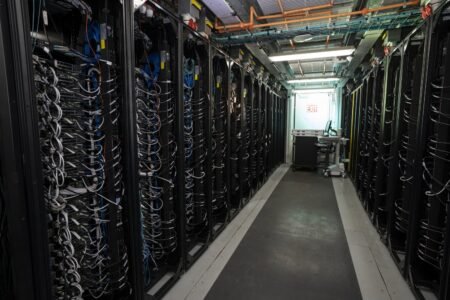
We can imagine a future in which MIT’s laboratories function more like a single, living, scientific organism, connected through shared AI research infrastructure. For example, suppose a neuroscience laboratory needs better methods for segmenting neurons in microscopy images. An AI agent could recognize a relevant advance from a computer vision group, connect the researchers, propose benchmarks, and help them iterate. It could surface unresolved questions to students and faculty, and make lessons from one laboratory available to others. To make this possible, we should build workflows that capture hypotheses, interventions, outcomes, failures, and interpretations. Shared systems should connect these workflows, allowing agents to use tools and information across laboratories with appropriate permissions. This will require substantial public and institutional investment now in compute, secure data systems, and expertise in adapting and post-training AI models.
Tracing this process could also preserve the lineage of ideas and make contributions, including those of graduate students, easier to recognize. With agreed rules for consent and credit, researchers could collaborate more openly, with greater confidence that their work would be acknowledged. This could also help answer the earlier question of how to recognize and reward intellectual contributions.
AI systems can already synthesize and reason about information from more sources than any individual researcher could absorb, and their ability to make useful connections will continue to improve. We should use this capacity to bring us together around hard scientific and engineering problems, helping us build on one another’s strengths and insights. To me, this is a promising path forward, but universities need to invest now to make it possible.