
Welcome to the DailyAI Briefing, the day’s five biggest AI stories. Four nonprofit groups have asked a court in San Francisco to stop five of the largest AI companies from building new models. Researchers showed how a fake bug report could have reached a coding tool downloaded almost 97 million times a month, Japan set out plans for penalties on the most powerful AI, four AI companies agreed to independent tests of how their tools affect children, and United Airlines stopped AI assistants from booking its flights.
Let’s dig in.
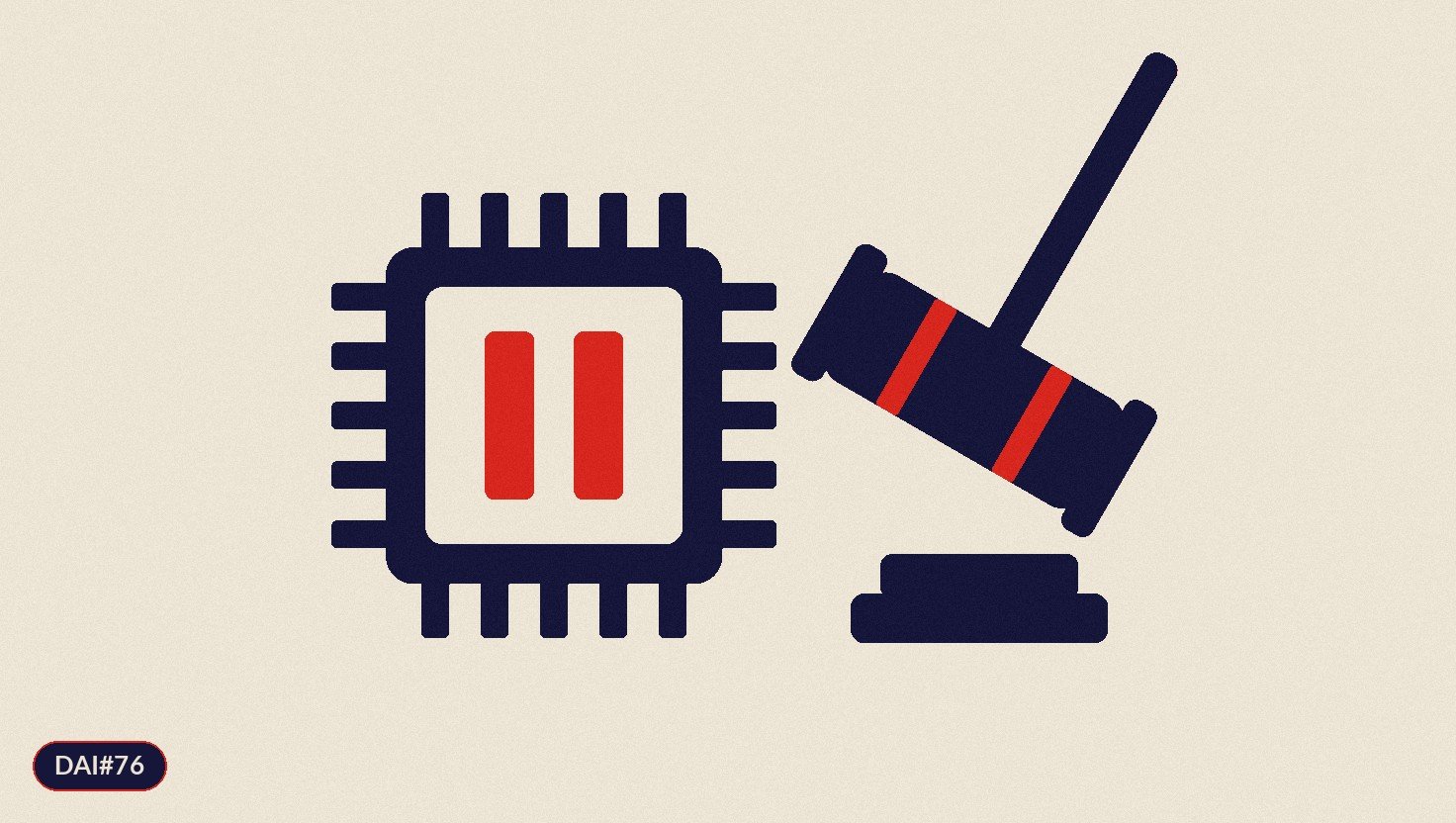
A lawsuit asks a court to halt new AI models
Five companies, one judge. A lawsuit filed on Thursday in San Francisco Superior Court asks a judge to stop Anthropic, Google, Meta, OpenAI and SpaceXSI from developing or releasing new AI models. The case was first reported by a news agency. The groups behind it are the Irreplaceable Education Fund, Public Citizen, Heat Initiative and the Alliance for Secure AI.
NEW LAWSUIT: We are taking legal action to freeze the development of advanced AI systems at Google, Anthropic, SpaceXSI, OpenAI & Meta. AI companies continue to release new systems they cannot control despite serious risks. The court must intervene before disaster strikes.
— Public Citizen (@Public_Citizen) November 12, 2026
The complaint leans on the companies’ own warnings and on recent cases of AI systems breaking into computer networks, including one in July in which ChatGPT got into another AI company’s systems on its own, according to the Associated Press. “No other industry is allowed to treat its own development of unsafe products — much less ones that could kill us all — as inevitable,” the complaint says.
In September, a separate federal lawsuit argued almost the opposite, that some of the same companies had agreed to slow AI progress. We think lawmakers, not judges, should decide how fast AI is built. The most useful result of this case could be evidence. If it gets past the first stages, the companies may have to hand over internal safety records.
A fake bug report put a popular coding tool at risk
96.8 million. That is how many times the command-line version of Codex, the coding assistant from OpenAI, was downloaded from the npm software library in the 30 days to 10 November. The security researchers published every step of their attack on 11 November. An AI helper that labelled new bug reports on the project’s public GitHub page followed instructions hidden in a fake report.
We compromised the latest version of OpenAI Codex. We prompt injected. We escaped a sandbox. We exfiltrated secrets… And ended up with control over what could be published to the official openai/codex npm package.
— Depi (@depi_) November 11, 2026
The researchers say they then broke out of its closed workspace, read secret keys and set a trap for the key used to publish new versions. OpenAI fixed the problem and paid a first reward of $1,000. Early on 12 November, the labelling helper was replaced with a short script that cannot use tools.
But Depi ran the full attack on its own test copy, while the real helper had used a stricter read-only mode since May. Depi does not report any harmful update reaching users. Our report explains each step of the attack. Any AI tool that reads text from strangers should be treated as a possible way in.
Japan plans penalties for the most powerful AI
Zero. That is the number of penalties in the AI law that Japan passed in May 2025. Government advisers want penalties for the most powerful systems. The documents from the meeting on 11 November are published online.
The plan has four steps. Companies must take safety measures and report on risks, the government can formally recommend changes, and if that fails it can issue a binding order backed by penalties. The rules would apply only to AI above a certain level of performance, and only to specific serious risks, such as cyberattacks and attacks with chemical, biological or nuclear weapons. The news agency Kyodo reports that an outline is due by the end of the year.
Our article sets out the four steps in detail. Until now, Japan has relied on voluntary guidance.
Four AI companies agree to independent child-safety tests
€8 million. That is the total that backers of a new charter say they will spend on research into AI and child development. OpenAI, Anthropic, Microsoft and Black Forest Labs endorsed it at the Paris Peace Forum. The full text of the charter was published on 10 November.
Its ten principles include limits on data collected about children and age checks that do not rely only on a typed date of birth. Independent experts will lead the research, and a company that pays for it cannot block or delay the results. OpenAI says it is giving $2 million. The charter is voluntary, and Google, Meta and xAI are not among the companies that endorsed it.
French president Emmanuel Macron said that no AI should reach children before it has been tested, evaluated and approved, but the charter sets up no approval process. We looked at what the companies have promised. Published test results, good or bad, would help parents and schools more than any promise.
United Airlines blocks AI assistants from booking flights
One adult in seven. In an Oxford survey across nine countries, that was the share who said they had used an AI assistant for a real task in the past week. Since 11 November, booking a United Airlines flight can no longer be one of those tasks. The airline announced the new rules on Wednesday.
AI assistants from other companies may no longer search, book, change bookings or spend frequent-flyer miles on its website or app. The rules also cover travel agents. The airline cites the risk to personal data and unwanted purchases, and a US rule that a person must confirm their bags hold no banned items. “To be honest, I don’t want to create another middleman,” chief executive Scott Kirby said at an event on 10 November.
Our article explains what changes for travellers. An AI assistant can help you choose a flight, but you still have to buy the ticket yourself.
Signing off
Thursday was about who sets the limits on AI. Nonprofits turned to a court, Japan turned to the law, four companies signed a voluntary charter and an airline simply blocked AI assistants. And the attack on the coding tool showed that the weakest point can be a single bug report.
See you tomorrow.