Close Menu
    Facebook X (Twitter) Instagram
    • Privacy Policy
    • Terms Of Service
    • Social Media Disclaimer
    • DMCA Compliance
    • Anti-Spam Policy
    Facebook X (Twitter) Instagram
    Fintech Fetch
    • Home
    • Crypto News
      • Bitcoin
      • Ethereum
      • Altcoins
      • Blockchain
      • DeFi
    • AI News
    • Stock News
    • Learn
      • AI for Beginners
      • AI Tips
      • Make Money with AI
    • Reviews
    • Tools
      • Best AI Tools
      • Crypto Market Cap List
      • Stock Market Overview
      • Market Heatmap
    • Contact
    Fintech Fetch
    Home»Crypto News»Ethereum»Ethereum Layer 2 Developers Discuss Scaling Functions Following Vitalik’s New Perspective on Rollups
    Ethereum L2 Builders Debate Scaling Role After Vitalik’s Rollup Rethink
    Ethereum

    Ethereum Layer 2 Developers Discuss Scaling Functions Following Vitalik’s New Perspective on Rollups

    February 4, 20263 Mins Read
    Share
    Facebook Twitter LinkedIn Pinterest Email
    kraken

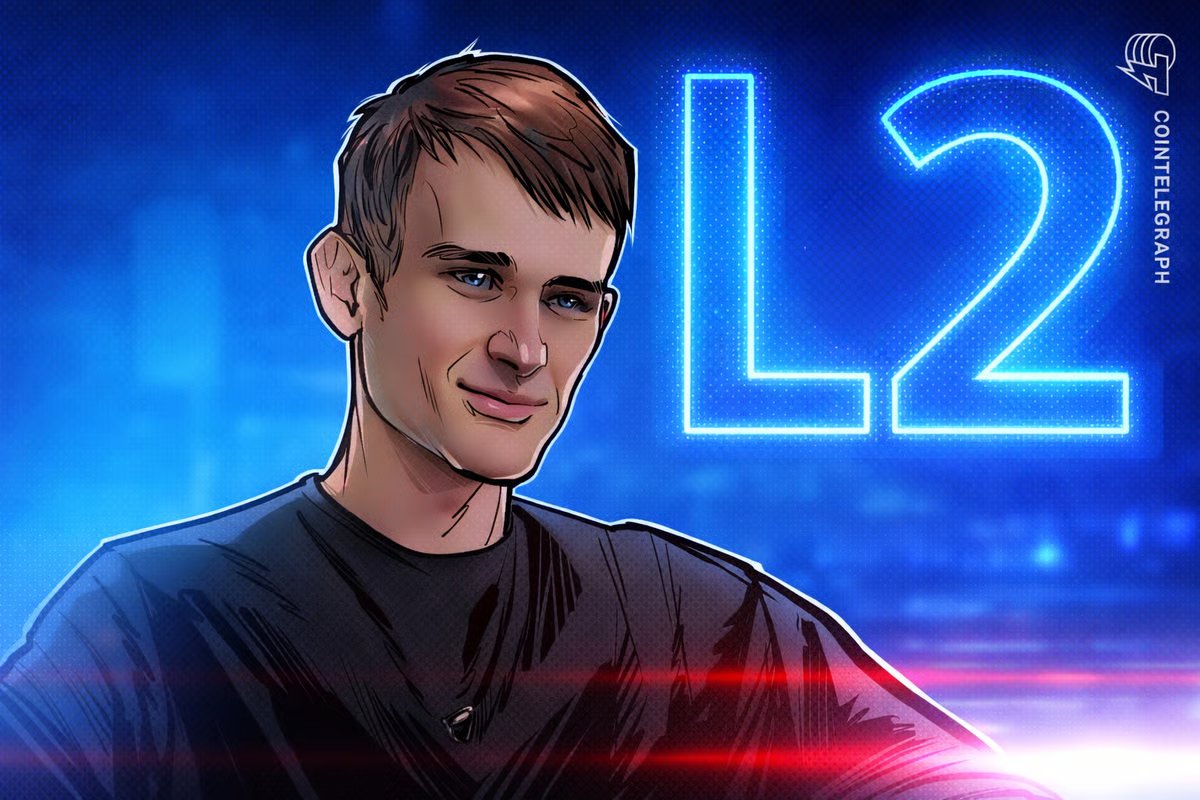
    Several layer-2 builders responded after Ethereum co-founder Vitalik Buterin said the original vision of L2s as the primary scaling engine “no longer makes sense,” calling for a shift toward specialization.

    In a Wednesday post, Buterin argued that many L2s have failed to fully inherit Ethereum’s security due to continued reliance on multisig bridges, while the base layer is increasingly capable of handling more throughput via gas-limit increases and future native rollups.

    The comments prompted responses from Ethereum layer 2s, who broadly agreed that rollups must evolve beyond being cheaper versions of Ethereum but diverged on whether scaling should remain central to their role.

    The Ethereum ecosystem is grappling with a shifting roadmap that aims to make the base layer more capable, while L2s reposition themselves as specialized environments serving distinct technical needs.

    Ethereum L2 builders accept shift, differ on scaling’s role

    Karl Floersch, a co-founder of the Optimism Foundation, said in an X post that he welcomed the challenge of building a modular L2 stack that supports “the full spectrum of decentralization.”

    aistudios
    Source: Karl Floersch

    He also acknowledged that major hurdles exist. These include long withdrawal windows, the lack of production-ready Stage 2 proofs, and insufficient tooling for cross-chain apps.

    “Stage 2 isn’t production-ready,” Floersch wrote, adding that existing proofs are not yet secure enough to support major bridges. He also supported native Ethereum precompile for rollups, a concept that Buterin recently emphasized as a way to make trustless verification more accessible.

    Steven Goldfeder, the co-founder of Arbitrum developer Offchain Labs, took a more forceful stance in a lengthy X thread. He argued that while the rollup model has evolved, scaling remains a core value of L2s.

    Goldfeder said Arbitrum was not built as a “service to Ethereum,” but because Ethereum provides a high-security, low-cost settlement layer that makes large-scale rollups viable.

    Source: Steven Goldfeder

    He also pushed back on the idea that a scaled Ethereum mainnet could replace the throughput currently handled by L2 networks. Goldfeder cited periods of high activity when Arbitrum and Base processed over 1,000 transactions per second, while Ethereum handled fewer.

    He warned that if Ethereum was perceived to be hostile to rollups, institutions might launch independent layer-1 chains rather than deploy on Ethereum.

    Base frames differentiation, Starknet hints alignment

    Jesse Pollak, head of Base, said in an X post that Ethereum’s L1 scaling was “a win for the entire ecosystem.” He agreed that L2s cannot just be “Ethereum but cheaper.”

    Pollak said Base has focused on onboarding users and developers while working toward Stage 2 decentralization, adding that differentiation through applications, account abstraction, and privacy features align with the direction Buterin outlined.

    Source: Jesse Pollak

    StarkWare CEO Eli Ben-Sasson, whose company develops the non-EVM Starknet rollup, offered a brief but pointed reaction on X, writing: “Say Starknet without saying Starknet.”

    Ben-Sasson’s comment hinted that some ZK-native L2s see themselves as already fitting the specialized role Buterin described.

    murf
    Share. Facebook Twitter Pinterest LinkedIn Tumblr Email
    Fintech Fetch Editorial Team
    • Website

    Related Posts

    Sharplink’s $751M Quarter Leaves $328M Nine-Month Loss

    Sharplink Reports $751M in Quarterly Revenue, Resulting in $328M Loss Over Nine Months

    November 10, 2026
    Cointelegraph

    Vitalik Shifts ETH Towards Value Storage as Crypto Tumbles Post-US Election: Hodler’s Update

    November 9, 2026
    Ethereum Leads Stablecoins and Tokenization as ETH Price Faces $2,206 Support Test

    Ethereum Dominates Stablecoins and Tokenization Amidst ETH Price Testing $2,206 Support Level

    November 8, 2026
    Cointelegraph

    Ethereum Developers Plan to Hold Off on Glamsterdam Fork Until Smart Contract Issues Are Addressed

    November 7, 2026
    Add A Comment

    Comments are closed.

    Join our email newsletter and get news & updates into your inbox for free.


    Privacy Policy

    Thanks! We sent confirmation message to your inbox.

    livechat
    Latest Posts
    Bitcoin ETFs See $1.3 Billion Weekly Outflows, Largest Since June

    Bitcoin ETFs Experience $1.3 Billion in Weekly Withdrawals, Marking Highest Since June

    November 10, 2026
    AI Basics Most Beginners Miss — 5 Ideas Behind Every AI Tool

    AI Basics Most Beginners Miss — 5 Ideas Behind Every AI Tool

    November 10, 2026
    How to Make Your First AI Video (Beginners Guide)

    How to Make Your First AI Video (Beginners Guide)

    November 10, 2026
    Cointelegraph

    Analysts Believe There Won’t Be Wider ‘Contagion’ Impact Following $6.3B Binance Theft

    November 9, 2026
    Cointelegraph

    tBTC Bridge Partially Resumes as $120M Aave Reserve Stays Frozen

    November 9, 2026
    livechat
    LEGAL INFORMATION
    • Privacy Policy
    • Terms Of Service
    • Social Media Disclaimer
    • DMCA Compliance
    • Anti-Spam Policy
    Top Insights
    Editorial collage of a smartwatch’s glowing optical sensors casting a triangular shadow beside a blood pressure cuff, with Google signage and everyday watch wearers.

    Google AI detects hypertension with standard watch sensors.

    November 10, 2026

    Confucius4-R2T2: Reliable Prefix ASR Model for Instant Transcription

    November 10, 2026
    binance
    Facebook X (Twitter) Instagram Pinterest
    © 2026 FintechFetch.com - All rights reserved.

    Type above and press Enter to search. Press Esc to cancel.