
Nikkei, KOSPI, Hang Seng Rise as Iran Conflict Signals Shift
Japan’s Nikkei 225 led the advance, climbing approximately 2.90% to close near 53,766 — recovering from correction territory reached earlier in the month when crude prices breached $100 per barrel. Hong Kong’s Hang Seng Index gained 2.79%, settling at 25,063.71, while South Korea’s KOSPI advanced 1.59% to roughly 5,642.
The moves marked a sharp reversal from a period of heavy selling that had seen some indices fall 5% to 12% on individual sessions. The catalyst was a combination of statements from Israeli and U.S. officials indicating restraint on Iranian energy infrastructure.
Israel disclosed it would not target further Iranian energy assets, following public pressure from U.S. President Donald Trump. Trump also announced what he described as “productive talks” with Iran and disclosed a 15-point peace proposal, while postponing planned strikes on Iranian power plants.
Iran, in response, signaled a limited reopening of the Strait of Hormuz to non-hostile vessels. The Strait of Hormuz carries roughly 20% of global oil and liquefied natural gas shipments. When Iran moved to restrict access following U.S. and Israeli airstrikes on Iranian territory, oil prices climbed well above $100 per barrel, triggering selloffs across import-dependent economies.
Asian markets bore the brunt. Japan imports approximately 90% of its oil from the Middle East, and South Korea carries a similarly high degree of energy dependence. As those concerns eased and oil prices pulled back sharply, investors rotated into equities that had been hardest hit. In Japan, buying was broad-based, with energy-sensitive and export-oriented stocks leading.

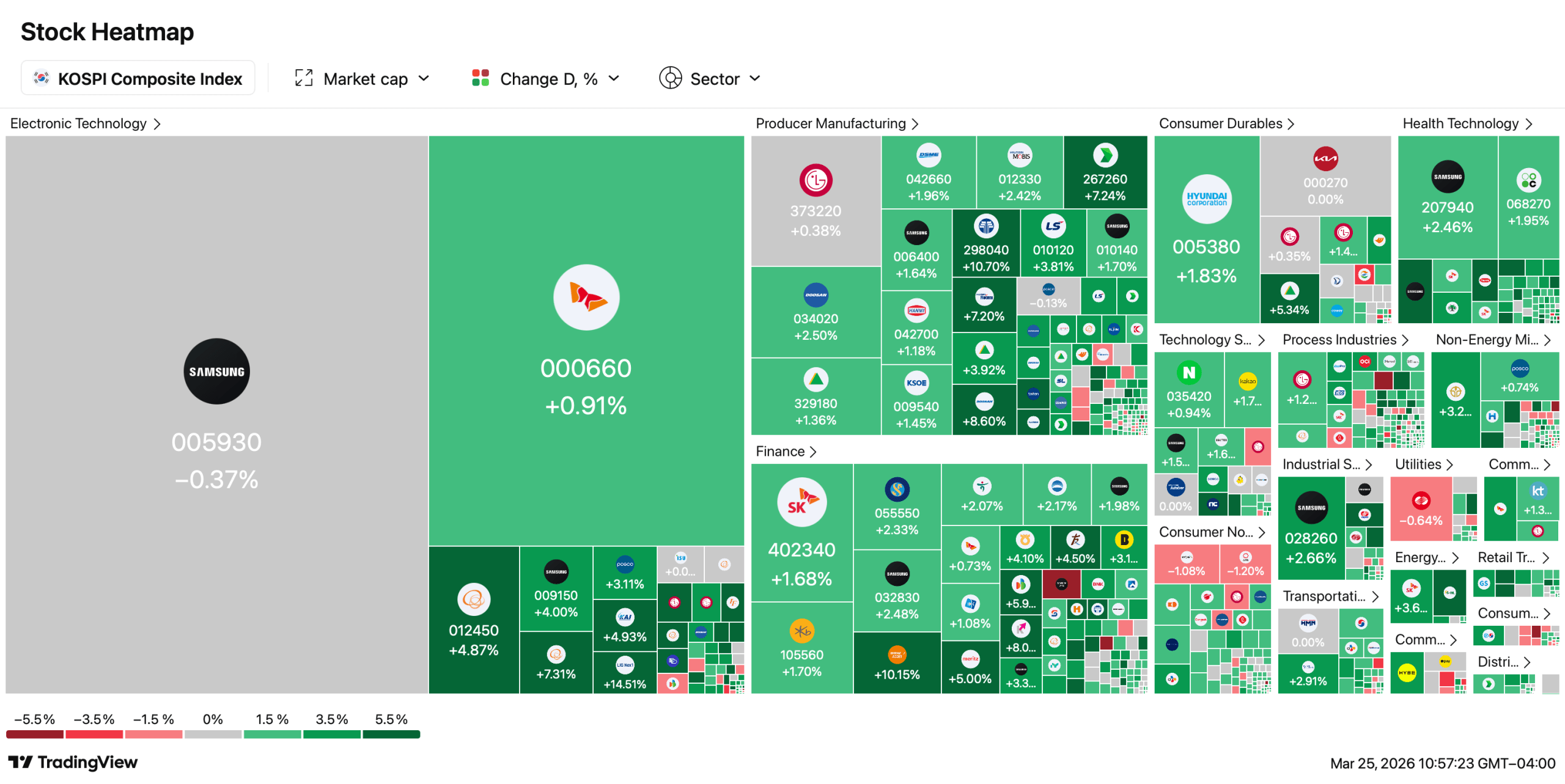
In Hong Kong, investors moved into undervalued technology and financial names, betting that stabilized trade flows would support earnings. In South Korea, Samsung Electronics and SK Hynix contributed to the KOSPI’s recovery as lower input cost expectations and renewed foreign inflows offset earlier outflows tied to oil-driven stagflation fears.
U.S. stocks and European markets reflected similar relief, though analysts noted the conflict remains unresolved. When Wall Street opened, the Nasdaq Composite climbed 264.88 points to 22,026.78, while the Dow Jones Industrial Average added 337.60 points to reach 46,461.66. The S&P 500 gained 51.49 points to 6,607.86, and the NYSE Composite rose 129.86 points to 22,101.16 just before 11 a.m. Eastern time on Wednesday.
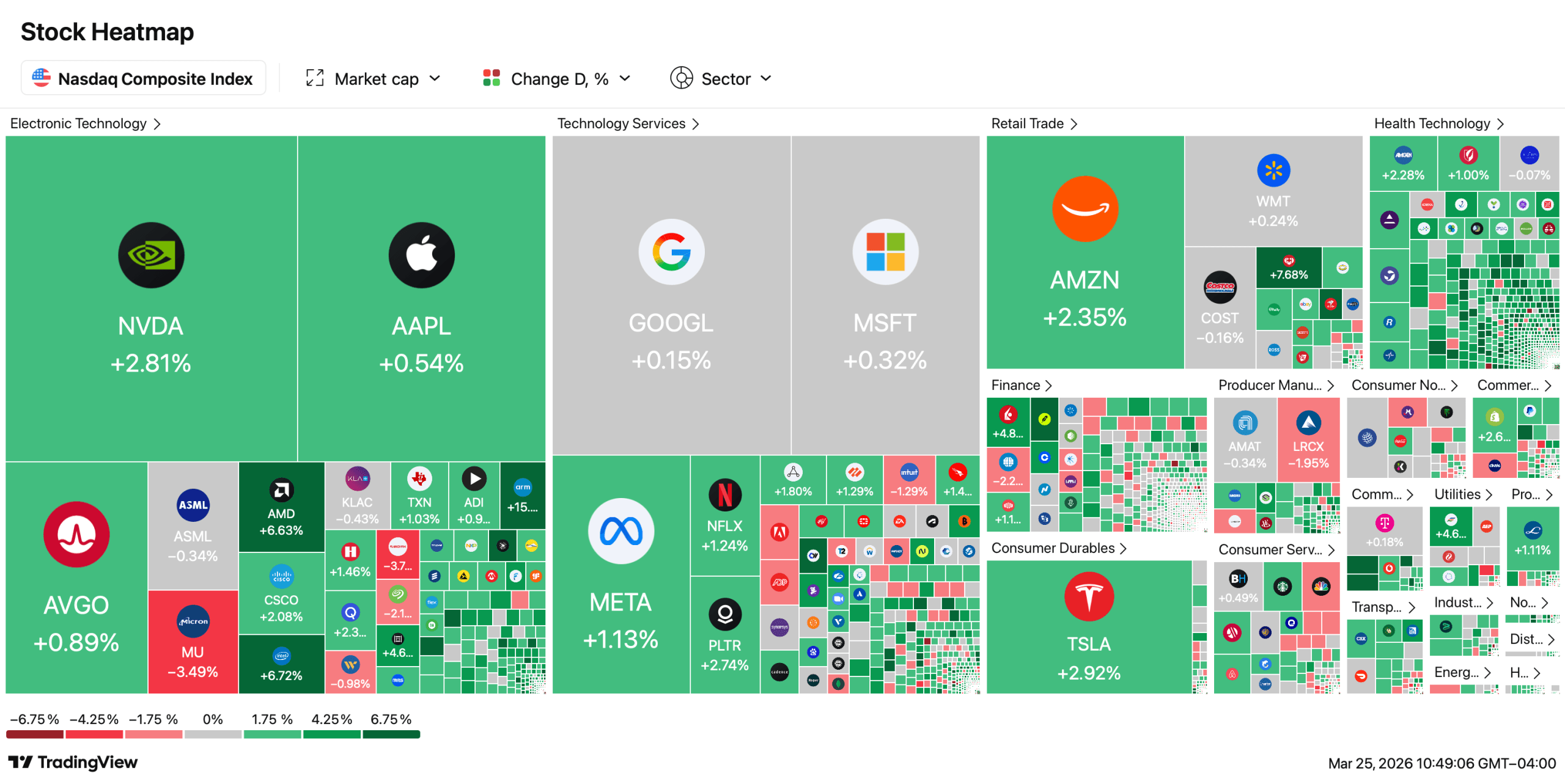
The across-the-board advance reflected the same geopolitical relief driving Asian markets, investors pricing in reduced energy supply risk as U.S.-Iran negotiations advanced and Strait of Hormuz tensions eased. Any breakdown in U.S.-Iran negotiations could reverse oil price declines and send markets lower again.
Earlier March trading demonstrated how quickly sentiment shifts — sessions with double-digit percentage swings in either direction were not uncommon. Investors watching the rally are also tracking whether lower energy costs translate into tangible relief on inflation data heading into the second quarter, and what flexibility that might provide central banks, including the Federal Reserve and the Bank of Japan.
The latest equities trading sessions illustrate how closely tied Asian equity performance is to Middle Eastern supply stability, a structural condition that has not changed, even as the immediate threat eased.
FAQ 🔎
- Why did Asian markets rally on March 25, 2026? Investors responded to de-escalation signals in the U.S.-Israel-Iran conflict, including Israeli pledges not to strike Iranian energy infrastructure and Trump’s announcement of peace talks, which eased fears of prolonged oil supply disruptions.
- What is the “energy relief” trade? It refers to buying in oil-import-dependent markets — particularly Japan, South Korea, and Hong Kong — when threats to Middle Eastern supply ease and energy prices pull back.
- How did the Strait of Hormuz affect oil prices in early 2026? Iran’s move to restrict the strait following U.S. and Israeli airstrikes pushed crude prices above $100 per barrel, driving inflation fears and sharp equity selloffs across Asia.
- Which Asian indices gained the most on March 25, 2026? Japan’s Nikkei 225 led with a gain of approximately 2.90%, followed by Hong Kong’s Hang Seng at 2.79% and South Korea’s KOSPI at 1.59%.