
For a company built on intellectual property, scale creates a familiar tension. Disney needs to produce and distribute content across many formats and audiences, while keeping tight control over rights, safety, and brand consistency. Generative AI promises speed and flexibility, but unmanaged use risks creating legal, creative, and operational drag.
Disney’s agreement with OpenAI shows how a large, IP-heavy organisation is attempting to resolve that tension by putting AI inside its operating system rather than treating it as a side experiment.
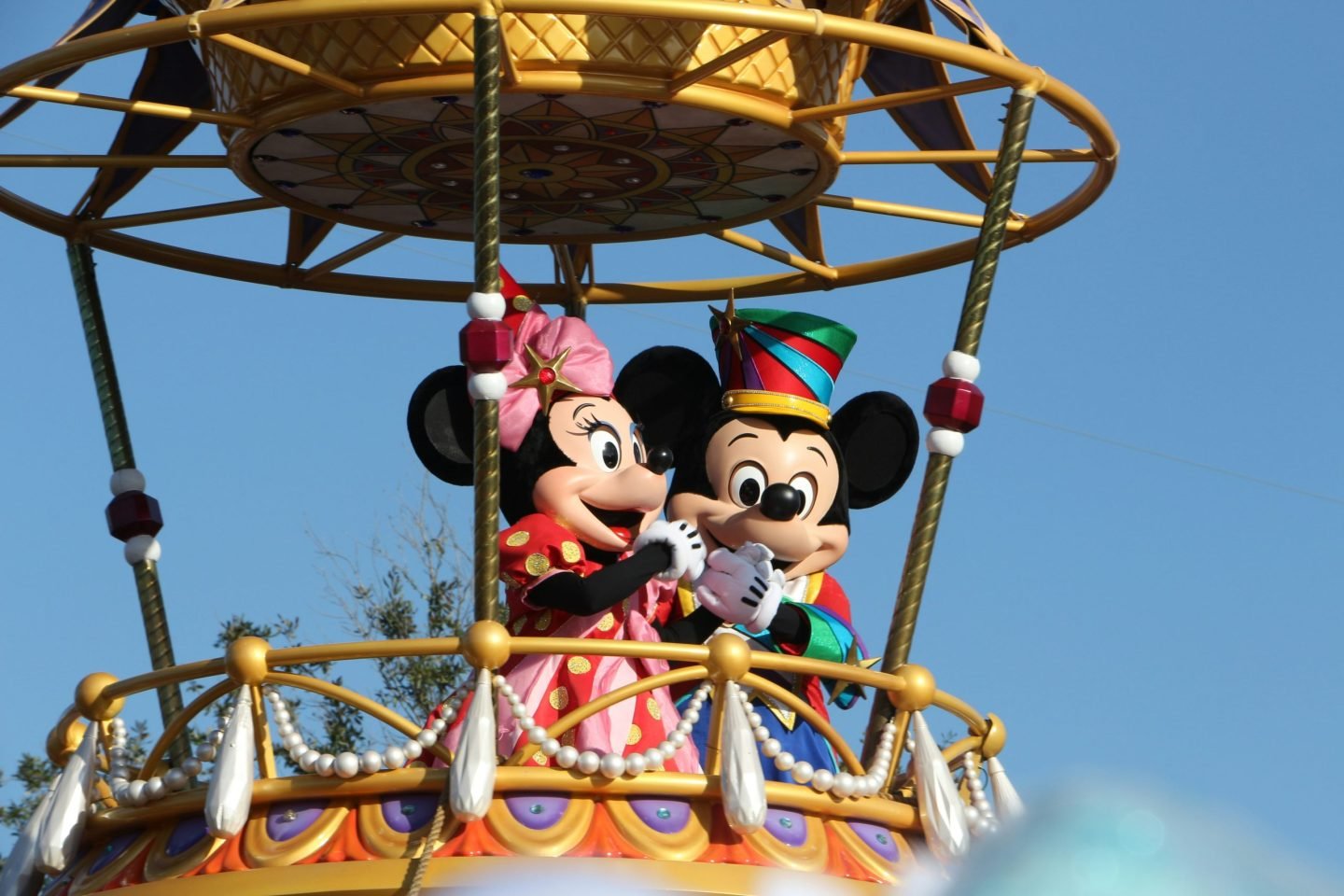
Under the deal, Disney becomes both a licensing partner and a major enterprise customer. OpenAI’s video model Sora will be able to generate short, user-prompted videos using a defined set of Disney-owned characters and environments. Separately, Disney will use OpenAI’s APIs to build internal tools and new consumer experiences, including integrations tied to Disney+. The company will also deploy ChatGPT internally for employees.
The mechanics matter more than the spectacle. Disney is not opening its catalogue to unrestricted generation. The licence excludes actor likenesses and voices, limits which assets can be used, and applies safety and age-appropriate controls. In practice, this positions generative AI as a constrained production layer—capable of generating variation and volume, but bounded by governance.
AI inside existing workflows
A consistent failure mode in enterprise AI programmes is separation. Tools live outside the systems where work actually happens, adding steps instead of removing them. Disney’s approach mirrors a more pragmatic pattern: put AI where decisions are already made.

On the consumer side, AI-generated content will surface through Disney+, rather than through a standalone experiment. On the enterprise side, employees gain access to AI through APIs and a standardised assistant, rather than a patchwork of ad hoc tools. This reduces friction and makes AI usage observable and governable.
The implication is organisational. Disney is treating generative AI as a horizontal capability—closer to a platform service than a creative add-on. That framing makes it easier to scale usage across teams without multiplying risk.
Variation without expanding headcount
The Sora licence focuses on short-form content derived from pre-approved assets. That constraint is deliberate. In production environments, much of the cost sits not in ideation but in generating usable variations, reviewing them, and moving them through distribution pipelines.
By allowing prompt-driven generation inside a defined asset set, Disney can reduce the marginal cost of experimentation and fan engagement without increasing manual production or review load. The output is not a finished film. It is a controlled input into marketing, social, and engagement workflows.
This mirrors a broader enterprise pattern: AI earns its place when it shortens the path from intent to usable output, not when it creates standalone artefacts.
APIs over point tools
Beyond content generation, the agreement positions OpenAI’s models as building blocks. Disney plans to use APIs to develop new products and internal tools, rather than relying solely on off-the-shelf interfaces.
This matters because enterprise AI programmes often stall on integration. Teams waste time copying outputs between systems or adapting generic tools to fit internal processes. API-level access allows Disney to embed AI directly into product logic, employee workflows, and existing systems of record.
In effect, AI becomes part of the connective tissue between tools, not another layer employees must learn to work around.
Aligning productivity with incentives
Disney’s $1 billion equity investment in OpenAI is less interesting as a valuation signal than as an operational one. It indicates an expectation that AI usage will be persistent and central, not optional or experimental.
For large organisations, AI investments fail when tooling remains disconnected from economic outcomes. Here, AI touches revenue-facing surfaces (Disney+ engagement), cost structures (content variation and internal productivity), and long-term platform strategy. That alignment increases the likelihood that AI becomes part of standard planning cycles rather than discretionary innovation spend.
Automation that makes scale less fragile
High-volume AI use amplifies small failures. Disney and OpenAI emphasise safeguards around IP, harmful content, and misuse, not as a values statement but as a scaling requirement.
Strong automation around safety and rights management reduces the need for manual intervention and supports consistent enforcement. As with fraud detection or content moderation in other industries, this kind of operational AI does not attract attention when it works—but it makes growth less brittle.
Lessons for enterprise leaders
Disney’s specific assets are unique. The operating pattern is not. Enterprise AI delivers value when it is designed as part of the organisation’s core machinery—governed, integrated, and measured—rather than as a showcase for what models can generate.