Close Menu
    Facebook X (Twitter) Instagram
    • Privacy Policy
    • Terms Of Service
    • Social Media Disclaimer
    • DMCA Compliance
    • Anti-Spam Policy
    Facebook X (Twitter) Instagram
    Fintech Fetch
    • Home
    • Crypto News
      • Bitcoin
      • Ethereum
      • Altcoins
      • Blockchain
      • DeFi
    • AI News
    • Stock News
    • Learn
      • AI for Beginners
      • AI Tips
      • Make Money with AI
    • Reviews
    • Tools
      • Best AI Tools
      • Crypto Market Cap List
      • Stock Market Overview
      • Market Heatmap
    • Contact
    Fintech Fetch
    Home»AI News»Google Colab Integrates KaggleHub for One Click Access to Kaggle Datasets, Models and Competitions
    Google Colab Integrates KaggleHub for One Click Access to Kaggle Datasets, Models and Competitions
    AI News

    Google Colab Integrates KaggleHub for One Click Access to Kaggle Datasets, Models and Competitions

    December 7, 20253 Mins Read
    Share
    Facebook Twitter LinkedIn Pinterest Email
    changelly

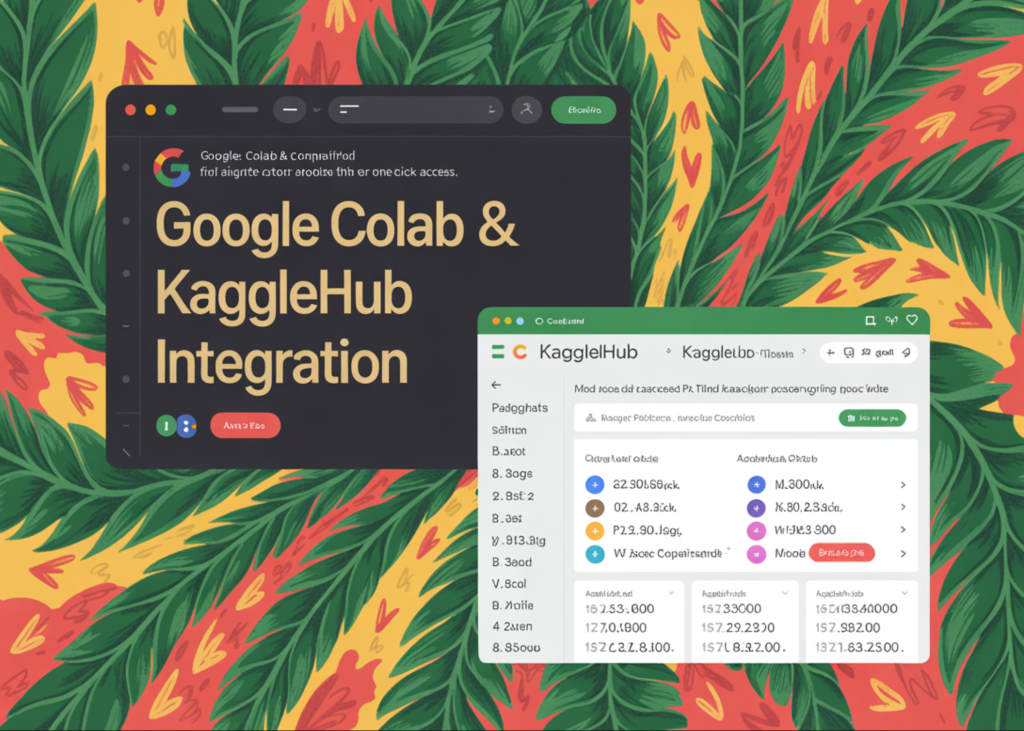
    Google is closing an old gap between Kaggle and Colab. Colab now has a built-in Data Explorer that lets you search Kaggle datasets, models, and competitions directly inside a notebook, then pull them in through KaggleHub without leaving the editor.

    What Colab Data Explorer actually ships?

    Kaggle announced the feature recently where they describe a panel in the Colab notebook editor that connects to Kaggle search.

    From this panel you can:

  • Search Kaggle datasets, models, and competitions
  • Access the feature from the left toolbar in Colab
  • Use integrated filters to refine the results, for example, by resource type or relevance
  • The Colab Data Explorer lets you search Kaggle datasets, models, and competitions directly from a Colab notebook, and you can import data with a KaggleHub code snippet and integrated filters.

    The old Kaggle to Colab pipeline was all setup work

    Before this launch, most workflows that pulled Kaggle data into Colab followed a fixed sequence.

    quillbot

    You created a Kaggle account, generated an API token, downloaded the kaggle.json credentials file, uploaded that file into the Colab runtime, set environment variables and then used the Kaggle API or command line interface to download datasets.

    The steps were well documented and reliable. They were also mechanical and easy to misconfigure, especially for beginners who had to debug missing credentials or incorrect paths before they could even run pandas.read_csv on a file. Many tutorials exist only to explain this setup.

    Colab Data Explorer does not remove the need for Kaggle credentials. It changes how you reach Kaggle resources and how much code you must write before you can start analysis.

    KaggleHub is the integration layer

    KaggleHub is a Python library that provides a simple interface to Kaggle datasets, models, and notebook outputs from Python environments.

    The key properties, which matter for Colab users, are:

  • KaggleHub works in Kaggle notebooks and in external environments such as local Python and Colab
  • It authenticates using existing Kaggle API credentials when needed
  • It exposes resource-centric functions such as model_download and dataset_download which take Kaggle identifiers and return paths or objects in the current environment
  • Colab Data Explorer uses this library as the loading mechanism. When you select a dataset or model in the panel, Colab shows a KaggleHub code snippet that you run inside the notebook to access that resource.

    Once the snippet runs, the data is available in the Colab runtime. You can then read it with pandas, train models with PyTorch or TensorFlow, or plug it into evaluation code, just as you would with any local files or data objects.

    quillbot
    Share. Facebook Twitter Pinterest LinkedIn Tumblr Email
    Fintech Fetch Editorial Team
    • Website

    Related Posts

    logo

    DeepSeek’s new AI model is rolling out quietly, not to the Wall Street market shock

    May 2, 2026
    Making the case for curiosity-driven science | MIT News

    Making the case for curiosity-driven science | MIT News

    May 1, 2026
    IBM launches AI platform Bob to regulate SDLC costs

    IBM launches AI platform Bob to regulate SDLC costs

    April 29, 2026
    Build a Reinforcement Learning Powered Agent that Learns to Retrieve Relevant Long-Term Memories for Accurate LLM Question Answering

    Build a Reinforcement Learning Powered Agent that Learns to Retrieve Relevant Long-Term Memories for Accurate LLM Question Answering

    April 28, 2026
    Add A Comment

    Comments are closed.

    Join our email newsletter and get news & updates into your inbox for free.


    Privacy Policy

    Thanks! We sent confirmation message to your inbox.

    quillbot
    Latest Posts
    4 Low-Cost Vanguard ETFs That Make Retirement Investing Easier

    rewrite this title in other words: 4 Low-Cost Vanguard ETFs That Make Retirement Investing Easier

    May 2, 2026
    logo

    DeepSeek’s new AI model is rolling out quietly, not to the Wall Street market shock

    May 2, 2026
    Cointelegraph

    DeFi’s Lose-Lose Problem on Freezing Stolen Funds

    May 1, 2026
    #1 Business Idea to Make Money with AI

    #1 Business Idea to Make Money with AI

    May 1, 2026
    Analyst Calls it a Buy Setup

    rewrite this title in other words: Analyst Calls it a Buy Setup

    May 1, 2026
    coinbase
    LEGAL INFORMATION
    • Privacy Policy
    • Terms Of Service
    • Social Media Disclaimer
    • DMCA Compliance
    • Anti-Spam Policy
    Top Insights
    Cointelegraph

    Crypto VC Funding Plunges to $659M in April, Hits 2024 Lows

    May 2, 2026
    Betpanda

    rewrite this title in other words: Stablecoins Hit 40% of Latam Crypto Buys

    May 2, 2026
    livechat
    Facebook X (Twitter) Instagram Pinterest
    © 2026 FintechFetch.com - All rights reserved.

    Type above and press Enter to search. Press Esc to cancel.