
Steve Hanke: Bond Vigilantes Are Turning on Trump as War Costs Mount, and Deficits Expand
Steve Hanke, professor of applied economics at Johns Hopkins University and a regular contributor to Fortune magazine, appeared on The David Lin Report this week, delivering a point-by-point breakdown of why the U.S. position in the Iran conflict is weaker than officials acknowledge and why the country’s balance sheet confirms what markets are starting to price in.
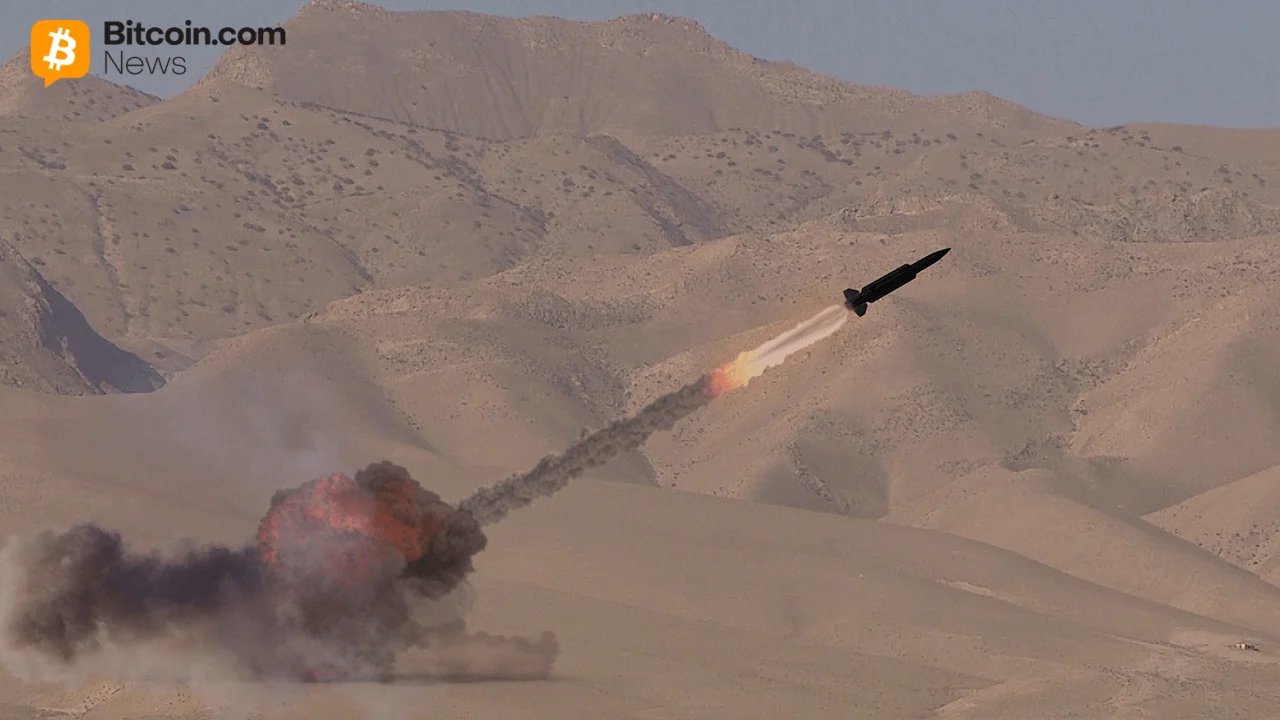
The war, now ongoing, has functionally closed the Strait of Hormuz to hostile nations. Throughput from the Strait has fallen roughly 95%, according to Hanke, who frames Iran’s position not as a nation under siege but as one quietly winning a war of attrition. Iran has called up over a million troops and controls the chokepoint on which the global economy depends.
Iran is winning the war, Hanke told Lin. “They are in control of the Strait of Hormuz,” Hanke insisted. “It looks to me like they are going to continue controlling the Strait, and in that sense, they have a lot of leverage over the West. They have Trump completely in a corner because the Western economies are suffering tremendous damage already.”
Iran’s oil exports have actually increased since the war began, Hanke explained, citing reports from contacts inside the country. Iranian crude is moving through tankers exiting the Strait, selling at higher prices with lower discounts than before hostilities. The Iranian rial has appreciated 6% since the war started. Inflation, which Hanke tracks independently, remains elevated at 67% annually but has come down from over 80%.
Physical oil markets in Asia are trading well above futures prices, a gap Hanke says will close as paper markets catch up to supply reality. He noted that the Philippines has declared a national energy emergency. New Zealand is making weekly cash payments to roughly 150,000 families to help cover fuel costs. The interview touched upon how Taiwan faces shortages of helium, a chip manufacturing input sourced from the Gulf, and is now sourcing it from Russia.

Russia, Hanke noted, is the war’s clearest beneficiary. It produces oil, fertilizer, and helium, three commodities bottled up in the Gulf, and is positioned to exchange sanctions relief for market access.
Hanke dismissed the Mossad’s decapitation strategy as a strategic failure. Intelligence assessments predicted the Iranian regime would collapse within days of the supreme leader’s assassination. It didn’t happen. “This goes in the failure book,” Hanke said.
The Johns Hopkins University economist added:
“The strategy and the objective of Israel and the United States have failed already.”
He also challenged the claim that the U.S. is insulated from oil price pain because it is a net energy exporter. While the U.S. exports more energy products overall, it remains a net importer of crude oil. “Forget the fact that we’re somehow insulated from world prices in oil,” Hanke said. “This is another joke coming out of Washington.”
The balance sheet picture is no cleaner. Hanke co-authored a piece in Fortune with former U.S. Comptroller General Dave Walker, drawing directly from the U.S. government’s own consolidated financial statements. As of September 30, 2025, the federal government holds roughly $6 trillion in assets against nearly $48 trillion in on-balance-sheet liabilities. Add Social Security and Medicare — both off-balance-sheet — and total liabilities climb to approximately $136 trillion.
“You have a little over six trillion in assets and almost 48 trillion in liabilities,” Hanke told Lin during the discussion.
He continued:
“That means you’re insolvent. It’s a complete catastrophe, and the numbers are deteriorating very rapidly.”
The bond market has reacted. Rising 10-year Treasury yields reflect investor concern over deficit expansion, and Hanke notes the relationship between higher yields and lower gold prices, not because gold’s long-term case has changed, but because rising rates increase the opportunity cost of holding a non-yielding asset. He maintains his gold price target range of $6,000 to $7,000 for the current cycle.
Hanke’s proposed fixes: a congressional commission to address existing liabilities, and a constitutional amendment modeled on Switzerland’s 2001 debt brake, one that would cap spending growth at the rate of real GDP expansion and require a balanced fiscal position over the business cycle. Whether Congress acts on either is, as Hanke put it, “another issue.”
FAQ
- Is the U.S. government insolvent? According to its own consolidated financial statements, the federal government holds roughly $6 trillion in assets against $136 trillion in total liabilities when Social Security and Medicare are included.
- Is Iran winning the war against the U.S. and Israel? Economist Steve Hanke argues Iran is winning by controlling the Strait of Hormuz, increasing oil exports, and waiting out a militarily superior but economically constrained opponent.
- How does the Iran war affect U.S. oil prices? The U.S. is a net crude oil importer, so global price increases driven by the Strait of Hormuz closure directly raise costs for American consumers and businesses.
- What is Steve Hanke’s gold price target? Hanke maintains a price target range of $6,000 to $7,000 per ounce for gold during the current cycle, though he expects the pace of gains to slow given rising yields and a stronger dollar.